
Protect Your Property Value and Insurance Eligibility
If you own a home in British Columbia or elsewhere in Canada that was built or renovated between the late 1970s and the late 1990s, there might be a ticking time bomb hidden behind your drywall. It doesn’t make a sound, it doesn’t leave immediate clues, but when it finally fails, the financial devastation can be immense.
We are talking about the Poly B plumbing crisis.
For decades, homeowners have been caught off guard by sudden, catastrophic water leaks that ruin hardwood floors, destroy basements, and spawn black mold. Worse still, the insurance industry has caught on, leaving many homeowners uninsurable or facing massive premium hikes.
If you have recently discovered grey plastic pipes in your utility room, or if you are looking to buy a home built in the 1980s, you need to understand exactly what you are dealing with. In this comprehensive guide, we will break down what these pipes are, why they fail, the reality of poly b plumbing replacement cost, and what your options are moving forward.

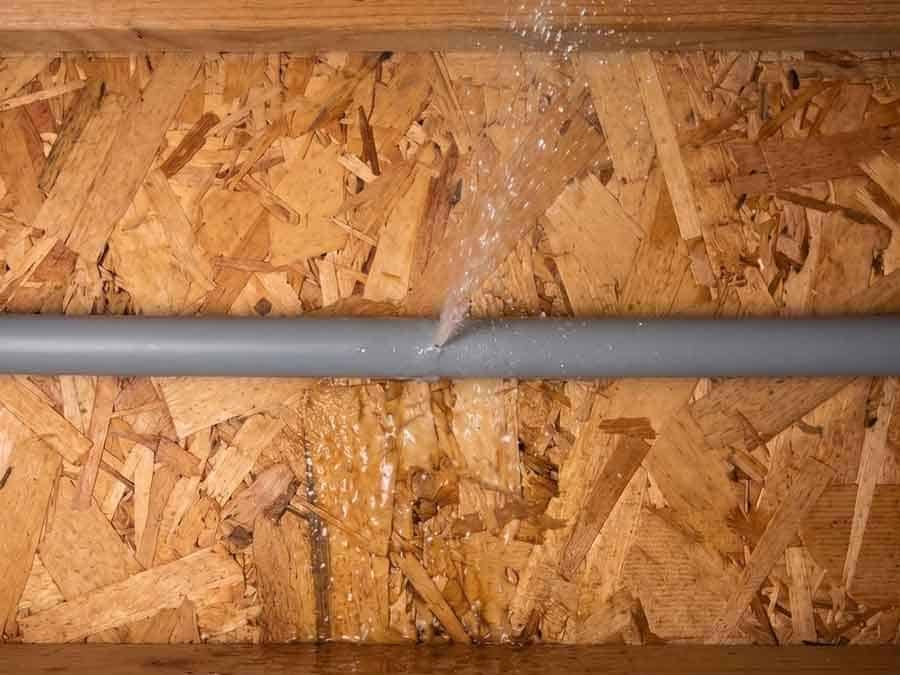
A typical Poly B pinhole leak.
What is Poly B Plumbing?
To understand the crisis, we first have to answer the fundamental question: what is poly b plumbing?
Poly B is the common industry shorthand for polybutylene, a type of plastic resin that was manufactured into water supply piping. Introduced to the North American market in the late 1970s, poly b plumbing was immediately hailed as the “pipe of the future.”
At the time, copper piping was the gold standard, but copper was expensive and required specialized welding skills to install. Polybutylene, on the other hand, was incredibly cheap to manufacture. It was flexible, making it easy for plumbers to snake through walls and around corners, and it didn’t require complex soldering. Because of its low cost and ease of installation, it was used in roughly 700,000 homes across Canada between 1978 and 1995.
So, what is poly b visually? It is relatively easy to identify. Poly b piping is typically a medium-grey, flexible plastic tube. You can usually spot it extending out of your hot water tank, connecting to your water meter, or underneath your bathroom and kitchen sinks. The pipes themselves are often stamped with the code “PB2110.”
While it seemed like a miracle material at the time, real-world conditions soon revealed a catastrophic design flaw.
The Anatomy of a Crisis: Why Poly B Pipes Fail
The fundamental problem with polybutylene is not how it handles water, but how it reacts to the chemicals in the water.
Municipal water treatment plants across Canada use chlorine to disinfect drinking water and keep it safe from bacteria. While safe for human consumption, chlorine is devastating to polybutylene. Over time, chlorine and other water-soluble oxidants react chemically with the plastic resin.
This chemical reaction causes the poly b to become brittle and flake away from the inside out. Because the degradation happens entirely on the interior of the pipe, the exterior can look perfectly healthy right up until the moment it bursts.
Several factors accelerate this degradation:
- High Chlorine Levels: Areas with higher chlorine concentrations in their municipal water supply see faster pipe failure rates.
- Hard Water: British Columbia and other parts of Canada often have hard water, which contains high levels of calcium and magnesium. These minerals exacerbate the breakdown of the plastic and the plastic/metal fittings.
- Heat: Hot water accelerates the chemical breakdown. This is why Poly B pipes connected to hot water tanks or baseboard heating systems are almost always the first to fail.
- Improper Installation: Because it was hailed as a “wonder pipe,” many contractors installed it improperly, bending it too sharply around corners or securing it too tightly, creating stress points that inevitably crack.
The failures rarely happen at the joints; they typically manifest as micro-fractures along the length of the pipe. Once a pinhole leak starts, the structural integrity is compromised, and a full rupture often follows.
The Ticking Time Bomb: Insurance and Real Estate Implications
Even if your pipes haven’t leaked yet, the mere presence of poly b piping in your home is now a major financial liability.
The Insurance Nightmare
The insurance industry relies on risk assessment, and the data on polybutylene is clear: it is not a matter of if it will fail, but when. Because a burst pipe can easily cause $20,000 to $50,000 in water and mold damage, insurers are aggressively mitigating their risk.
Today in Canada, if you have Poly B, you will likely face one of the following scenarios:
- Refusal of Coverage: Many standard insurance providers will outright refuse to issue a new homeowner’s policy if the house contains Poly B.
- Cancelled Renewals: If you already have a policy, your insurer may refuse to renew it unless you can prove you have completed a full poly b pipe replacement.
- Exclusions: Some insurers will cover your home but explicitly write a water-damage exclusion into your policy, meaning if the pipe bursts, you are 100% financially responsible for the repairs.
- Sky-High Premiums: The few companies willing to underwrite the risk will charge exorbitant premiums and deductibles.
The Real Estate Impact
If you are trying to sell a home with polybutylene, be prepared for a difficult transaction. When a prospective buyer hires a home inspector, the presence of Poly B will be flagged immediately. Savvy buyers will either walk away from the deal entirely because they know they won’t be able to insure the property, or they will demand a massive price reduction—usually asking for double the actual cost of replacing polybutylene pipes to cover their risk and hassle.

Pinholes and cracks can suddenly appear due to the breakdown occurring on the inside of the pipes where it cannot be seen.
The Financial Reality: How Much Does It Cost to Replace Poly B Plumbing?
When homeowners realize the severity of the situation, the immediate next question is inevitably: how much does it cost to replace poly b plumbing?
Because every house is different, there is no single flat rate. The cost to replace poly b plumbing is dictated by the size of the home, the number of water fixtures, and how easily the plumbing can be accessed.
In Canada, and specifically in markets like BC (Vancouver, Victoria, Kelowna), the average poly b plumbing replacement cost typically breaks down as follows:
- Small Condos/Apartments (1-2 Bathrooms): $5,000 – $9,000
- Medium Single-Family Homes (2-3 Bathrooms): $10,000 – $16,000
- Large Homes or Custom Builds (3+ Bathrooms): $18,000 – $25,000+
What Drives the Cost?
When analyzing the poly b plumbing replacement cost, it is important to understand what you are actually paying for. It is not just the price of new pipes; it is the labor-intensive process of accessing them.
- Square Footage and Bathrooms: More square footage means longer pipe runs. More bathrooms mean more complex connections to toilets, sinks, showers, and tubs.
- Accessibility (The Drywall Factor): Plumbers cannot magically pull new pipes through the walls. They have to cut trenches into your drywall and ceilings to remove the old Poly B and install the new system. The time it takes to carefully cut, and subsequently the cost to hire a drywaller to patch, sand, and paint those holes, makes up a significant portion of the total budget.
- Local Labor Rates: Plumbers in high-cost-of-living areas like Metro Vancouver will naturally charge higher hourly rates than those in rural communities.
It is highly recommended to hire a plumbing company that offers “turnkey” repiping—meaning their quote includes both the plumbing work and the subsequent drywall repair and painting. This saves you the headache of acting as a general contractor trying to coordinate multiple trades.
Is There a Poly B Replacement Grant in BC?
Given the massive expense of repiping a home, one of the most common searches online is for a poly b replacement grant. Homeowners understandably want to know if the provincial or federal government will help them shoulder the burden of a defective building material that was once approved by the building code.
The hard truth: There is no specific poly b replacement grant in BC or anywhere else in Canada.
While the provincial government and BC Hydro offer excellent Home Renovation Rebate Programs, these are strictly focused on energy efficiency—things like upgrading to a heat pump, adding insulation, or installing high-efficiency windows. Upgrading your plumbing to prevent water damage does not qualify for energy rebates.
Furthermore, the class-action lawsuits against the manufacturers of polybutylene resin (such as Shell Oil and DuPont) were settled decades ago. The deadlines to file a claim and receive compensation from those trust funds expired in the early 2000s.
If you are facing a poly b pipe replacement, you will have to finance it privately. Many homeowners utilize a Home Equity Line of Credit (HELOC) or refinancing options to cover the upfront capital, viewing it correctly as an investment that preserves the equity and insurability of their property.

Modern PEX piping is the standard for Poly B replacement.
The Repiping Process: What to Expect
If you are committing to a poly b pipe replacement, knowing what to expect can significantly reduce your stress. While it is a major structural renovation, a professional repiping crew can execute it with surprising efficiency.
Here is the standard timeline for a residential repipe:
- The Assessment: A specialized plumber maps out your home’s water lines, identifies where cuts need to be made, and provides a detailed quote.
- Preparation and Protection: Before any tools are lifted, floors are covered, and furniture is protected with drop cloths.
- Making the Cuts: Strategic holes are cut into the drywall and ceilings to expose the Poly B pipes.
- Extraction and Installation: The old grey piping is cut out and removed. The new piping system is run through the walls and connected to all fixtures.
- Pressure Testing: Before the walls are closed up, the new system is capped and pressure-tested with air or water to ensure there are absolutely no leaks. City inspectors may also review the work at this stage.
- Patching and Painting: Professional drywallers patch the holes, mud, sand, and paint the walls to match the existing decor, leaving the home looking exactly as it did before.
Depending on the size of the home, the actual plumbing work usually takes 2 to 4 days, with drywall repair taking an additional few days. Most homeowners can remain in the house during the process, as crews will usually restore temporary water access at the end of each workday.
PEX vs. Copper: Choosing Your Replacement Material
When undertaking a poly b pipe replacement, you will need to choose what material replaces it. Today, there are two standard options: Copper and PEX (Cross-linked polyethylene).
Copper is the traditional standard. It is incredibly durable, lasts for 50 to 100 years, and is resistant to bacteria. However, it is rigid, requires soldering, and the raw material is highly expensive. Choosing copper will push your poly b plumbing replacement cost to the absolute maximum.
PEX is the modern standard and the overwhelming choice for residential repipes today. Unlike Poly B, PEX is highly resistant to chlorine and chemical breakdown. It is flexible, meaning it can be installed in long, continuous runs with fewer joints (which means fewer potential leak points). It expands rather than bursts if water freezes inside it. Best of all, PEX is significantly cheaper than copper, making the overall cost of replacing polybutylene pipes much more manageable.
Conclusion: Proactive Action is the Only Option
Living with polybutylene plumbing is a gamble where the house always wins. The pipes are degrading silently, and the financial consequences of a sudden rupture far exceed the poly b plumbing replacement cost. Between water mitigation, mold removal, replacing ruined drywall and flooring, and the potential denial of insurance coverage, a reactionary fix is always a nightmare.
If your home contains poly b plumbing, the best time to replace it was yesterday. The second best time is today. By taking a proactive approach, you control the timeline, you protect your property’s value, and most importantly, you buy yourself peace of mind knowing that the hidden danger in your walls is finally gone.